

All About Cork Bark Care
Cork bark is one of the most popular natural materials used in terrariums, vivariums, reptile habitats, and air plant displays. Lightweight, durable, and naturally resistant to rot, cork bark provides a beautiful way to display air plants while also creating climbing surfaces, shelters, and decorative elements for a variety of animals.
Whether you're using cork bark in a bioactive enclosure or as a mount for your Tillandsia collection, proper placement and occasional maintenance will help keep it looking great for years to come. In this guide, we'll cover using cork bark in pet habitats, caring for mounted air plants, and maintaining cork bark for long-term use.

Cork Bark for Reptiles and Other Pets:
Cork bark is a natural product that works beautifully in reptile enclosures, amphibian habitats, and bioactive terrariums. Its lightweight structure, textured surface, and natural resistance to moisture make it a dependable choice for creating climbing areas, hiding places, and decorative habitat features.
Before placing cork bark in an enclosure, take a moment to inspect the piece and gently remove any loose particles with a soft brush if needed. As with any habitat accessory, be sure the cork bark is positioned securely and appropriately for your animal's size, species, and enclosure setup.
With proper placement and minimal maintenance, cork bark can provide years of natural beauty and functionality in a wide variety of habitats!
Watering Air Plants Mounted to Cork Bark:
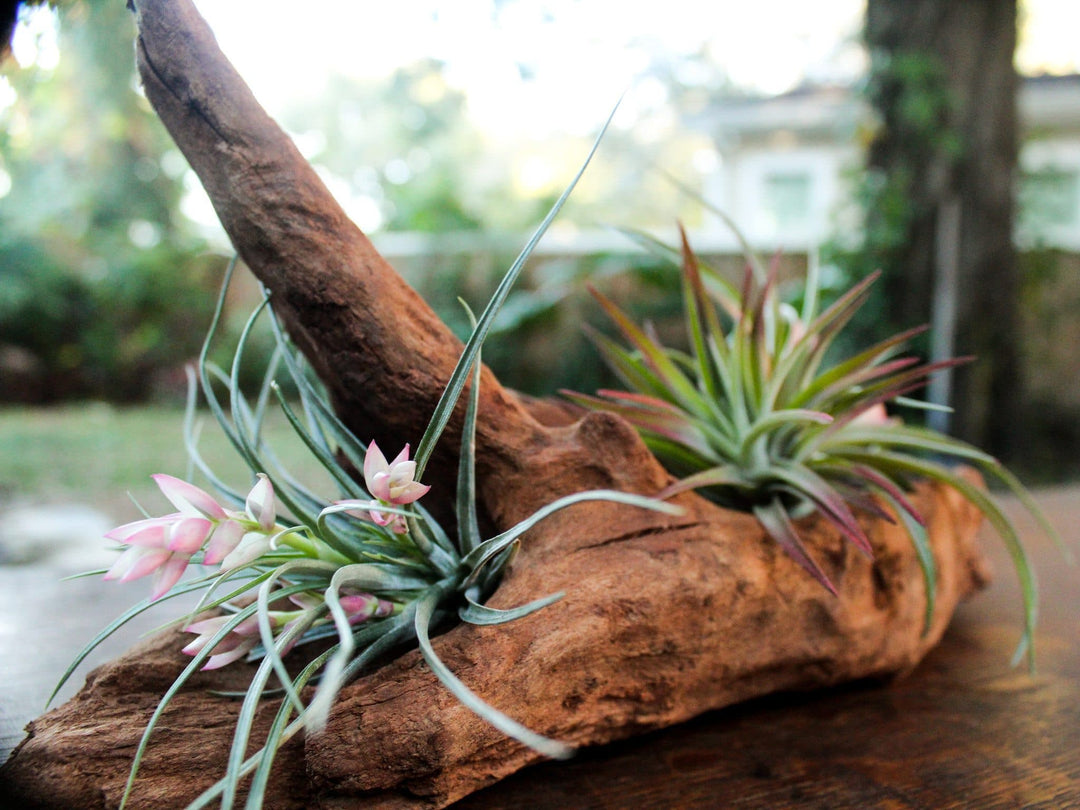
Cork bark is one of the best mounting surfaces for air plants. Its textured surface allows roots to grip naturally while creating a display that closely resembles how many Tillandsia grow in the wild. Our DIY Cork Bark Mounts are available both with and without Tillandsia, making it easy to create a custom arrangement or get started with a ready-to-display plant. Cork bark provides a beautiful, natural, and long-lasting foundation for showcasing Tillandsia.
Mounted air plants, whether naturally attached to cork bark or secured with plant-safe adhesive or wire, require a slightly different watering approach than loose air plants.
Misting Mounted Air Plants: For most mounted displays, misting is the easiest watering method. Thoroughly spray the leaves until they are fully saturated, taking care not to allow water to remain trapped in the center of the plant for extended periods.
After watering, gently shake away excess moisture and position the plant so it can dry completely. Good air circulation is essential for preventing rot.
Depending on your climate, humidity, and the species being grown, mounted air plants may need to be watered up to three times per week.
Soaking Mounted Air Plants: Some species, particularly mesic varieties, may require deeper hydration than misting alone can provide.
When additional watering is needed, submerge the entire cork bark mount in water for 15–30 minutes with the plant facing downward. Cork bark is naturally buoyant, water-resistant, and highly durable, allowing the mount to float during soaking without damaging the bark or the attached air plants.
After soaking, remove the display from the water, gently shake away excess moisture, and allow the air plant to dry completely before returning it to its home.
The most important part of watering mounted air plants is ensuring they dry thoroughly after watering. Standing water trapped at the base of the plant can lead to rot, which is one of the most common causes of air plant death.
For more information on mounting air plants, please visit our Mounting Air Plants 101 page. If you're ready to get started, explore our DIY Cork Bark Mounts without Tillandsia for custom projects or our DIY Cork Bark Mounts with Tillandsia for an easy way to create a natural display.

Maintaining Cork Bark:
One of the many benefits of cork bark is that it requires very little maintenance. However, over time, it may collect substrate, mineral deposits, or organic debris from plants and habitat inhabitants.
To clean cork bark, simply remove loose debris with a soft brush and rinse with water as needed. In humid environments, occasional mold or fungal growth may develop on the surface. This is most common in newly established terrariums and bioactive enclosures where moisture levels are high.
If mold appears, gently scrub the affected area with a soft brush and clean the surface using a solution of equal parts water and distilled white vinegar. After cleaning, rinse thoroughly and allow the cork bark to dry before returning it to its display location.
Avoid using soaps, chemical cleaners, or disinfectants, as residues may be harmful to pets, plants, and beneficial microorganisms.
A Natural Choice for Plants and Pets:
Whether you're creating a naturalistic reptile habitat, designing a bioactive terrarium, or mounting your favorite Tillandsias, cork bark is an attractive and long-lasting choice. With minimal maintenance and proper care, quality cork bark can provide years of beauty and functionality in both plant displays and animal habitats.
Leave a comment